Signs of Termite Damage Around Windows
April 8, 2026
Share this Article:
Windows often show small changes long before bigger problems become obvious. Paint may start to bubble, trim can feel softer than it used to, and a frame that once glided smoothly may begin to stick, especially where termites and windows meet along vulnerable trim and framing. It’s easy to chalk these shifts up to age or seasonal movement, but they can signal activity beneath the surface. When termites reach window areas, the damage often stays hidden until performance declines, so early awareness matters for homeowners who want to protect their home’s structure and long-term value.
Why Termites Target Window Areas
Window openings act as natural transition points in a home’s structure. Framing members, sills, and trim connect exterior materials to interior finishes, and small gaps can develop over time. Moisture from condensation, rain, or aging caulk can soften wood fibers, creating conditions that termites find appealing.
Because window frames often sit close to siding and soil, they can become convenient entry points. Subterranean termites travel through mud tubes that may run along foundation walls and into wood components near the opening. Once inside, they feed quietly on the structural elements that support the window.
Homeowners may not immediately connect soft trim or fine cracking in paint with termite activity. Damage usually develops behind finished surfaces, gradually weakening the framing that anchors the window. Understanding why these areas are vulnerable helps people stay alert to small changes before repairs grow more involved and expensive.
Common Signs of Termite Damage
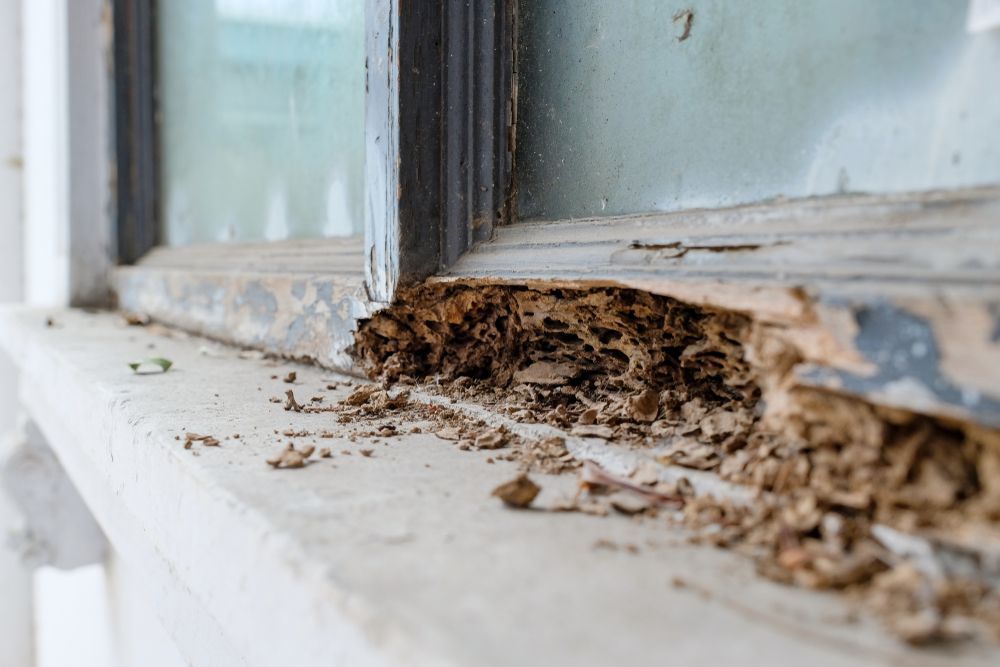
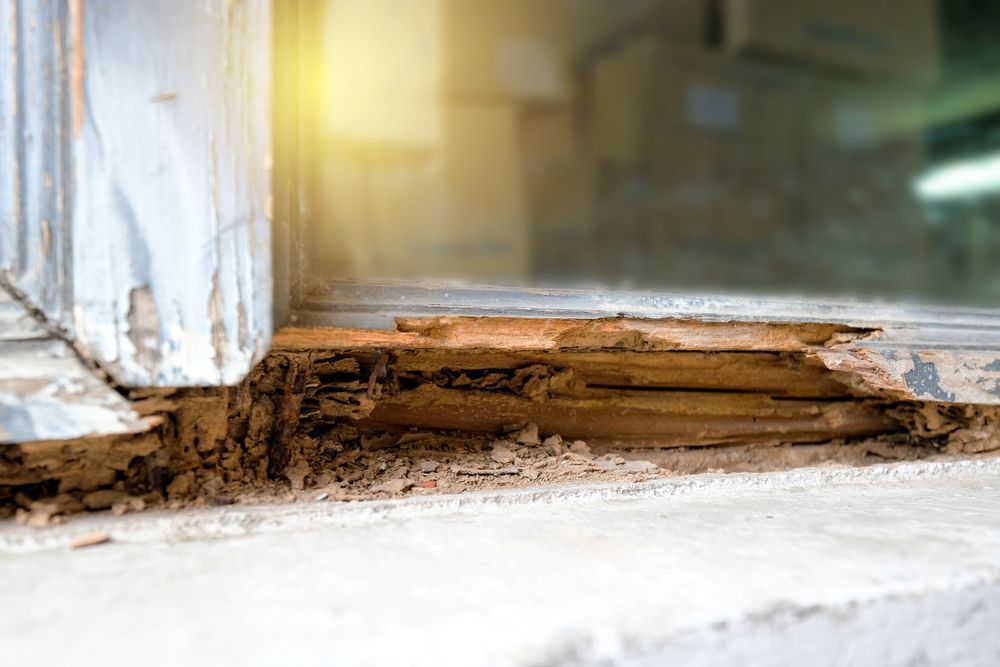
Damage from termites and windows often begins subtly, where the frame, trim, and surrounding wall come together. Early signs can look like normal wear, which is why careful observation matters. Looking closely at trim, sills, and surrounding drywall can reveal changes that hint at hidden activity.
Common indicators include:
- Soft or hollow-sounding wood when tapped
- Bubbling or peeling paint that appears without moisture staining
- Small pinholes in trim or frame components
- Mud tubes along foundation walls or near window casings
- Sagging sills or slight separation at joints
- Windows that suddenly stick or no longer close evenly
Homeowners may also notice fine wood dust near the sill or faint clicking sounds within the wall. These details are easy to overlook during routine upkeep. Noticing small irregularities helps build a clearer picture of what may be happening behind finished surfaces.
These signs suggest termites may be weakening the structure around the window. Early attention creates an opportunity to address both pest treatment and window condition before performance drops further.
How Termites Affect Window Performance
As termites consume wood within the frame or surrounding structure, the window can start to shift. Even minor deterioration in the sill or jamb affects alignment. A sash that once operated smoothly may rub against the frame or fail to latch securely. Over time, gaps can open between the window unit and the rough opening.
These shifts affect more than daily convenience. Air infiltration increases when seals no longer sit tightly against the frame. Drafts often feel stronger during colder months, and conditioned air can escape more easily in summer. Moisture may also find its way in, compounding the original damage and speeding up overall material breakdown.
When homeowners notice these changes early, they still have choices. Dealing with termite activity comes first. Evaluating the window’s structural condition follows. A careful assessment helps clarify if repairs can stabilize the opening or if replacement is the better long‑term approach for durability and energy performance.
Structural Risks of Untreated Damage
If termite activity around windows goes unchecked, the concern reaches beyond trim or surface materials. Window openings depend on solid framing to carry loads from above and spread weight evenly. As termites hollow out wood components, the strength erodes.
Over time, sills can sag, and vertical framing members can lose rigidity. This may lead to visible settling around the opening, cracked drywall, or uneven gaps between the frame and wall. In more advanced cases, water intrusion follows deteriorating wood, deepening the damage and affecting nearby insulation and finishes.
The longer deterioration continues, the more complex repairs tend to be. A problem that began as localized sill damage can grow into a broader framing project. Spotting signs of termites early lets homeowners address treatment and evaluate structural impact before repairs expand in scope and cost, helping preserve safety and long‑term property value.
Repairing Versus Replacing Windows
After the termite treatment is complete, the next step is to look closely at the window itself. In some situations, damage is limited to surface trim or part of the sill. Focused repairs may stabilize the opening if the surrounding framing is still sound.
When structural members inside the wall have been significantly weakened, full replacement often becomes the more dependable solution. A new window set into properly restored framing can bring back alignment, improve comfort, and support long‑term performance. It can also address hidden deterioration that may not be obvious from the interior.
Here is a simple way to think through the options:
| Consideration | Repair | Replacement |
|---|---|---|
| Damage Scope | Localized trim or minor sill damage | Structural framing deterioration |
| Window Operation | Still mostly functional | Persistent sticking or misalignment |
| Energy Performance | Minor impact | Noticeable drafts and air leakage |
| Long Term Durability | Dependent on the remaining wood condition | New unit with updated materials |
A careful evaluation helps clarify which route fits the home’s condition, budget priorities, and long‑term plans.
When to Call a Window Professional
Once pest treatment has addressed the infestation, a professional window evaluation helps complete the picture. If frames feel soft, windows no longer close properly, or drafts persist despite basic repairs, it may be time for a closer look. Subtle movement around the opening can continue even after termites are gone.
A window specialist can check framing stability, measure for squareness, and determine if the unit itself has been compromised. From there, the path forward becomes clear: confirm effective termite treatment, understand the structural impact, and decide if repair or full replacement lines up best with long‑term goals.
At Woodland Windows and Doors in Roselle, our team works with homeowners across the Chicagoland area to review window conditions and talk through practical next steps. If you’ve started to notice changes around your windows, you can request a design consultation or schedule an in‑home evaluation to explore the best solution for your home.
Connect with Us: