Which Windows Perform Best in Midwest Winters?
September 21, 2026
Share this Article:
Winter has a way of revealing which windows are doing their job. A room that feels comfortable in fall can develop cold spots near the glass, noticeable drafts around the sash, or uneven temperatures once winter in Chicagoland settles in.
Choosing a window for a cold climate, however, involves more than looking for “energy-efficient” on the label. Glass construction, frame design, air leakage, weatherstripping, window style, and installation all influence how the window performs when temperatures drop. Even the direction a window faces can change which combination makes the most sense.
Several performance factors are especially useful when evaluating windows for a Midwest winter, starting with how effectively the entire window limits heat transfer.
What Makes a Window Winter-Ready?
Start with the window’s U-factor, which measures how readily heat moves through the entire unit. Lower numbers indicate better insulating performance.
Air leakage matters too. A window can have efficient glass and still feel drafty if air moves through gaps around the sash or frame. Good weatherstripping, tight construction, and proper installation all contribute to winter comfort.
Best Window Styles for Tight Seals
Casement and awning windows are strong cold-weather choices because closing the window pulls the sash tightly against the weatherstripping.
Double-hung windows can also perform well, but their sliding sashes rely more heavily on weatherstripping and proper alignment. The right choice depends on the opening, ventilation needs, architectural style, and how you use the room.
Double-Pane vs. Triple-Pane Glass
Triple-pane glass generally provides better insulation and can keep the interior glass surface warmer during very cold weather. That can make a noticeable comfort difference near large windows, bedrooms, or exposed elevations.
But triple-pane is not automatically the best value for every opening. A high-performing double-pane window may provide excellent winter performance at
a lower cost. Compare the actual whole-window ratings rather than choosing by pane count alone.
Low-E Glass and Insulating Gas Fills
Low-E coatings help control heat movement through glass. In winter, the right coating helps retain indoor heat while still managing solar gain.
Insulating glass units may also contain argon or krypton between the panes. These gases reduce heat transfer compared with ordinary air and contribute to a lower U-factor.
Best Window Frame Materials for Winter
Vinyl, fiberglass, wood, and clad-wood windows can all perform well in cold climates when properly designed.
Instead of assuming one material is always best, compare the complete window. Frame construction, insulation, expansion and contraction, weatherstripping, glass package, and durability all affect performance in Midwest temperature swings.
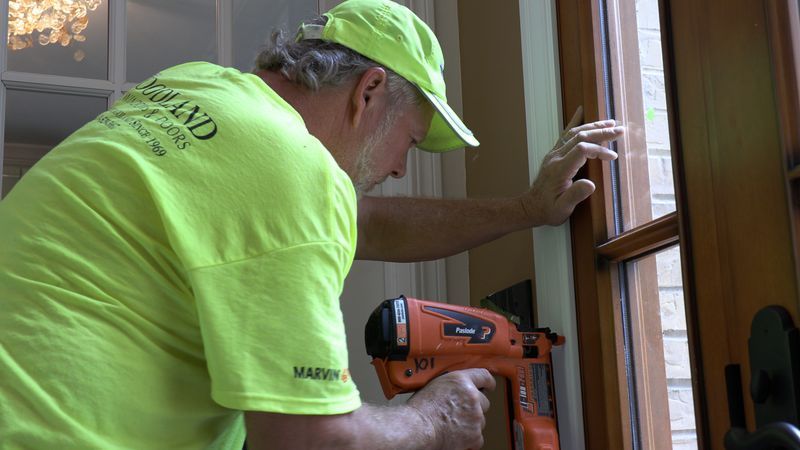
Why Quality Installation Matters
Even a high-performance window can disappoint if the opening is not properly sealed.
Gaps around the frame, inadequate insulation, poor alignment, or an existing frame in poor condition can contribute to drafts and cold spots. That is why product selection and installation should be considered together rather than as separate decisions.
Woodland Windows and Doors provides installation with window purchases so the product and opening can be evaluated as part of the same project.
Match Window Glass to Sun Exposure
Not every window in your home faces the same conditions.
A large north-facing window may benefit from different priorities than a sunny south- or west-facing opening. Window size, room use, shade, wind exposure, and seasonal solar heat all influence the right glass package.
Woodland can help compare window styles, frame materials, U-factors, glass options, and exposure by room rather than applying one specification throughout the house.
Need help choosing windows for your home? Request a design consultation or stop by one of our showrooms in Roselle or Oak Brook to explore your options.
Connect with Us: